Every week, expatriate professionals in Riyadh, Jeddah and Dammam turn down better jobs for the same reason: they believe their sponsor has to release them first. That belief is out of date.
Since the Labor Reform Initiative, your right to change employers in Saudi Arabia is decided digitally, inside the Qiwa platform. It is not decided by your sponsor’s signature, a stamped release letter, or the plastic card in your wallet. The platform checks your record against government databases and either opens the transfer or does not. Your manager’s opinion is not part of that check.
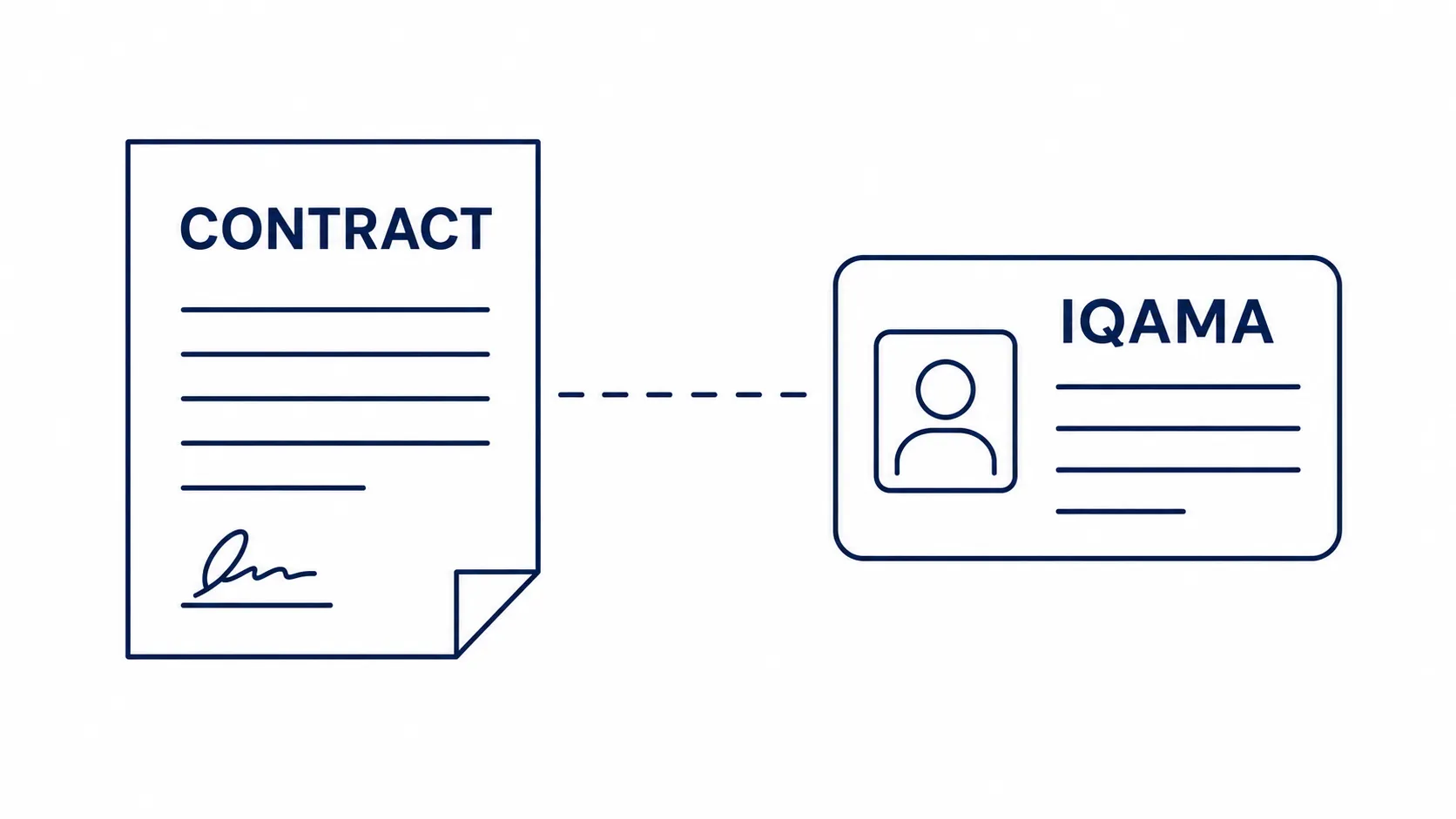
The confusion that costs people the most money is a date problem. Workers assume their Iqama expiry date tells them when they are free to move. It does not. A completely different date, buried in your Qiwa contract, controls that.
This guide explains exactly how the two dates interact, the four situations that let you transfer without your employer’s approval, the digital notice that stops your contract renewing behind your back, and how to protect yourself if an employer retaliates. Read it before you resign — not after.
The Rule Most Expats Get Wrong
This is the single most important idea in this guide:
Your Qiwa contract status controls your job mobility. Your Iqama status controls your legal residency.
They are two different systems, run by two different authorities, and they expire on two different dates.
| System | What it controls | Where you check it |
|---|---|---|
| Qiwa Unified Contract | Job title, wage, contract end date, notice period, transfer eligibility | Qiwa Individuals (Employee Portal) |
| Iqama / residency | Legal stay in the Kingdom, exit and re-entry, dependents | Absher Individuals and Muqeem |
A worker can have a valid Iqama for another 8 months and still be free to transfer today, because the Qiwa contract already ended. The reverse also happens: a worker with 18 months left on a Qiwa contract can become free to transfer because the employer let the Iqama lapse.
Under the Labor Reform Initiative, run by the Ministry of Human Resources and Social Development (MHRSD), a defined set of situations lets an expatriate worker transfer without the current employer’s approval. The system checks these conditions automatically against government records. Nobody has to argue about it.
1: Qiwa Expiry vs. Iqama Expiry: 4 Real-World Scenarios
Scenario A — Qiwa contract expired, Iqama still valid
Your position: Strong.
Once your documented Qiwa contract reaches its end date and is not renewed, contract expiry is one of the recognised grounds for transfer without employer consent. A new company sends you a digital offer, you accept it in Qiwa, and the system routes it down the no-consent track instead of asking your old sponsor for approval.
What to watch: The contract end date recorded in Qiwa must be correct. If your employer entered the wrong date, or if the contract auto-renewed because nobody filed a non-renewal notice, the system will treat you as still under contract. Check the recorded date before your new employer pays anything.
There is also a practical window after a contract ends. In current practice, a worker has roughly 60 days from the end of the employment relationship to transfer to a new establishment or arrange a final exit. Do not let that window drift.
Scenario B — Iqama expired, Qiwa contract still active
Your position: Strong, if the lapse was the employer’s failure.
Renewing your work permit and Iqama is the employer’s legal duty, not yours. When an employer fails to renew, the expired residency is itself a recognised ground for transfer without consent, even though months remain on your contract.
What to watch:
- Late-renewal fines usually have to be settled before the transfer completes. In most cases the new employer pays these as part of the transfer.
- If your current employer renews the Iqama in the middle of your transfer request, the ground can disappear. Move quickly and quietly.
- An expired Iqama also exposes you to fines and inspection problems while you wait, so treat this as urgent, not as leverage to hold for later.
Scenario C — No documented contract, or a contract left “pending”
Your position: Strong, with proof.
Documenting the employment contract in Qiwa is mandatory for every private-sector establishment. If your employer never uploaded and authenticated a contract within the legal period after your arrival, you gain the right to transfer without consent.
What to watch: A contract sitting in “Pending Approval” is a grey area, not an automatic exit. Sometimes it is pending because the employer never sent it. Sometimes it is pending because you never opened Qiwa and accepted it. Log in, screenshot the status and the date, and confirm your eligibility inside Qiwa before you resign from anything.
Scenario D — Mid-contract resignation vs. natural expiry
Your position: This is where people lose money.
| Resigning mid-contract | Letting the contract expire | |
|---|---|---|
| Legal basis | Termination without a lawful reason | Natural end of a fixed term |
| Exposure under Article 77 | Employer may claim compensation, often linked to the remaining contract period | None |
| End of Service Benefits | Reduced by the resignation tiers | Paid in full |
| Employer consent | Usually needed | Not needed |
Article 77 of the Saudi Labor Law deals with compensation when either side ends the contract without a lawful reason. For a fixed-term contract, compensation is commonly assessed against the remaining months of the term. It is not an automatic formula, and labour courts weigh the contract wording and the facts, but the exposure is real.
Letting the term run to its recorded end date costs you nothing. That single decision is often worth tens of thousands of riyals.
2: Step-by-Step: The Digital Non-Renewal Protocol
Almost every expatriate contract in Saudi Arabia is a fixed-term contract that renews automatically unless someone stops it. Stopping it is a digital act with a deadline.
Step 1 — Read your actual contract inside Qiwa. Open Qiwa Individuals, go to your contract, and note two fields: the contract end date and the non-renewal notice period. That notice period is negotiated inside the Unified Contract and commonly falls between 30 and 90 days.
Step 2 — Count backwards and set a reminder. If your contract ends 31 December and the notice period is 60 days, your real deadline is the end of October. Miss it, and the contract renews for a fresh term. You are then back in Scenario D, exposed under Article 77.
Step 3 — File the Request of Non-Renewal inside Qiwa. The digital notice submitted through the platform is the legally recognised way to signal that you will not renew. Submit it before the deadline and keep the confirmation.
Step 4 — Do not rely on paper. This is the most expensive mistake in this entire guide. A signed resignation letter, a WhatsApp message, or an email to your manager does not stop the automatic renewal counter inside Qiwa. The Unified Contract requires notices between the parties to be served through the platform. A manager who accepts your paper letter, smiles, and files nothing is not ending your contract. The system renews you anyway.
Step 5 — Serve the notice period properly. Keep attending work. Keep your attendance record clean. Unauthorised absence of 15 consecutive days, or 30 non-consecutive days in a year, can justify an absence report against you and destroy an otherwise perfect exit.
3. The Transfer Workflow: How the New Employer Takes Over
Step 1 — The digital offer. The new establishment raises a job offer in Qiwa with the job title, wage and contract terms. It arrives in your Qiwa Individuals account, not by email.
Step 2 — You accept in Qiwa. You typically have around 10 days to accept. Read the job title and salary carefully. Once accepted, those terms become your binding contract. Do not accept a downgraded title on a verbal promise to fix it later.
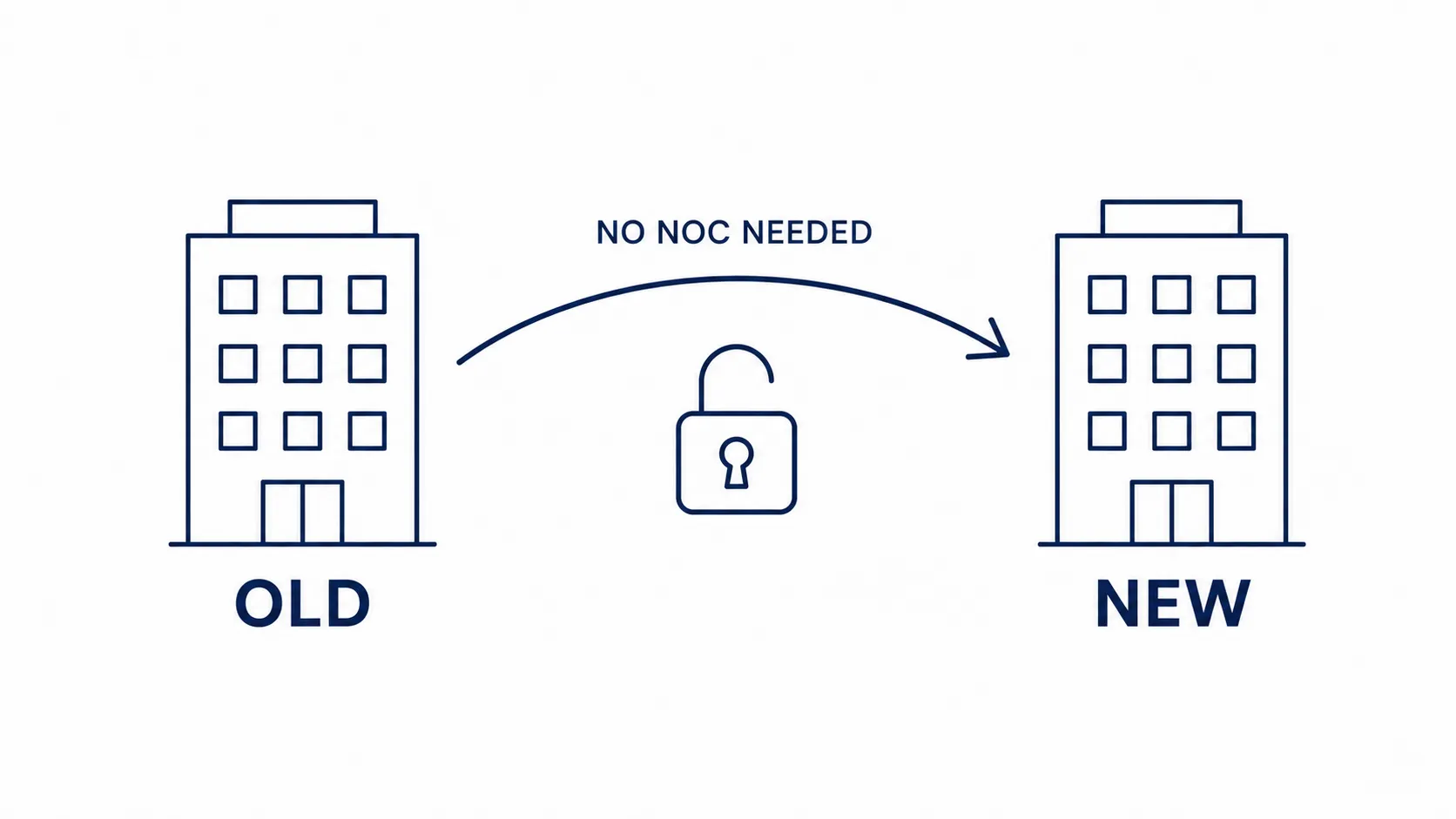
Step 3 — The system decides the track. Qiwa checks your record automatically:
- No-consent track: your contract has expired, your Iqama was not renewed, wages were unpaid for three consecutive months, the contract was never documented, or another recognised condition applies. MHRSD verifies the condition against Wage Protection System (WPS) and contract records.
- Consent track: none of the exceptions apply. Your current employer is notified and typically has around 14 days to respond. Silence or rejection cancels the request.
Step 4 — Fees and finalisation. Transfer fees are the new employer’s responsibility, not yours. The first transfer is commonly priced at SAR 2,000.
Step 5 — New work permit and Iqama. The new establishment completes the residency side through Absher Business / Muqeem, and your Iqama is reissued under the new employer. Note that a transfer does not automatically extend your Iqama validity — transfer and renewal are separate transactions.
4. Defence Guide: Protecting Yourself from an Absence Report
The old Huroob label has been replaced across government systems by statuses such as “Absent from Work” and “Discontinued from Work”. The name changed. The damage did not. An accepted report suspends your legal status, blocks transfer and renewal, and can end in deportation and a re-entry ban.
What protects you:
- Keep working until the system says you are free. Almost every retaliation case starts the day an employee stops attending work on the strength of a verbal promise.
- A pending transfer is your shield. An employer cannot lawfully use an absence report to punish an employee who is following the Qiwa process and still reporting to work. A report filed while a labour case or transfer is properly on record is challengeable as malicious.
- Act inside the window. If a report is filed against you, you generally have a short window (commonly cited as around 20 days) to contest it with MHRSD. Do not wait to see if it resolves itself.
Evidence to archive now — before you need it:
- Screenshots of your Qiwa contract page, showing the end date, job title and status
- Screenshots of the submitted non-renewal request and its confirmation
- Salary transfer records through Mudad / WPS, plus your own bank statements
- Attendance records, timesheets, biometric logs or gate records
- Any written instruction to stop attending work
- Your Absher and Muqeem Iqama status, captured monthly
Save everything to personal cloud storage using your own email address. Company laptops and company email accounts get locked on your last day.
Frequently Asked Questions
Can my employer cancel my final exit visa if I find a new sponsor on Qiwa? A final exit visa and a service transfer are separate transactions. An issued final exit visa generally has to be cancelled by the employer or allowed to lapse before a transfer can proceed. If you have a live offer, deal with the exit visa status first — do not let both run at once.
What happens to my End of Service Benefits when I transfer without sponsor approval? Your ESB is a legal debt owed by the old employer for your completed service. It does not vanish because the transfer was consent-free. How much you receive depends on how the relationship ended: contract expiry pays in full, while ordinary resignation is scaled by service length — roughly one-third at 2–5 years, two-thirds at 5–10 years, and full entitlement beyond 10 years. If it is not paid, file through the MHRSD friendly settlement process.
Is my Qiwa contract still binding if my salary was delayed for three consecutive months? Three consecutive months of unpaid wages is one of the clearest recognised grounds for transfer without consent, and the WPS record proves it without you saying a word. Article 81 separately allows an employee to leave without notice, keeping full entitlements, when the employer breaches core obligations. Both routes need evidence, so keep the bank statements.
Do I still need a No Objection Certificate (NOC)? No. The NOC has no legal standing in the transfer process. Qiwa checks eligibility against government records. An employer who demands money for an NOC is selling you something they do not own.
Informational Disclaimer
This guide is general information about Saudi labour regulations and the Qiwa platform. It is not legal advice, and it does not create a professional relationship. Rules, fees, notice periods and processing windows in this area change frequently. Verify your specific case against your own Qiwa record and current MHRSD guidance, or consult a licensed Saudi labour lawyer, before you resign, stop attending work, or accept an offer.